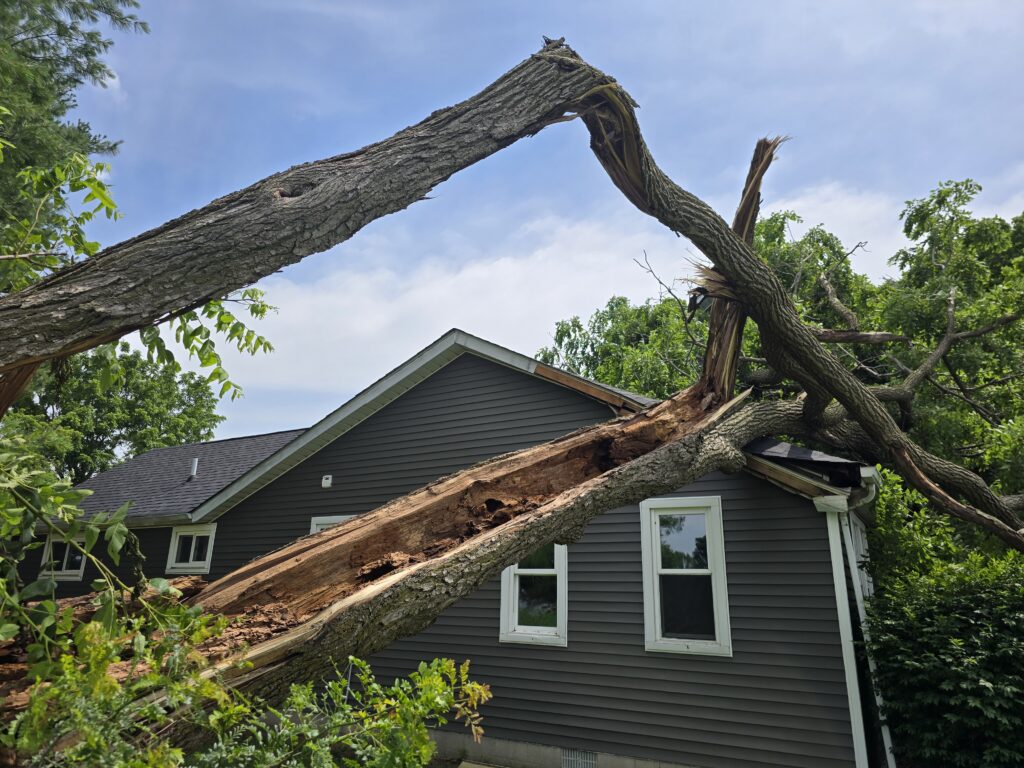
Storms are one of the biggest threats to trees in Indiana. High winds, heavy rain, snow, and ice place extreme stress on branches, trunks, and root systems. Even when a tree doesn’t fall immediately, storm damage can weaken its structure and turn it into a hidden hazard that may fail days or even weeks later.
Knowing how to identify storm damage and respond quickly can prevent costly property damage, injuries, and emergency situations.
Need help now? Review our 24-hour emergency tree service and insurance documentation guidance, or see how crane-assisted removal helps control large or unstable trees near structures.
How Storms Weaken Trees
Strong winds twist tree trunks and limbs in unnatural directions. Heavy rain saturates soil, making roots lose their grip. Ice and snow add weight to branches that were never designed to hold it. All of these forces combine to weaken trees internally, even if they still look upright.
Cracks in major limbs, leaning trunks, lifted soil around the base, and broken tops are all signs that a tree may be structurally compromised. Trees damaged in storms are far more likely to fall during the next weather event — sometimes with no warning.
Why Broken Limbs Are So Dangerous
One of the most common storm hazards is hanging or partially broken branches. These limbs can remain suspended in the canopy, held only by torn fibers. A light breeze or additional rainfall can cause them to drop suddenly.
This is one of the leading causes of injury and property damage after storms. Removing these hazards quickly through professional storm debris cleanup and tree trimming is critical for safety.
When a Tree Needs Emergency Attention
Some storm-damaged trees can be saved. Others become too dangerous to keep standing. Trees that are leaning heavily, uprooted, split down the trunk, or tangled in power lines should never be approached by homeowners.
In these situations, 24-hour emergency tree service and crane-assisted removal are often required to safely control and remove the tree without causing further damage to nearby homes, fences, or vehicles.
Delaying removal in these cases can lead to catastrophic failure and insurance claims that could have been avoided.
What Homeowners Should Do After a Storm
After severe weather, walk your property and look for obvious signs of damage:
- Leaning or shifting trees
- Cracked trunks or limbs
- Hanging branches
- Exposed roots or lifted soil
- Trees contacting roofs or power lines
Even if damage looks minor, a professional inspection can reveal internal cracks, rot, or root failure that is not visible from the outside. Early detection often allows for trimming or stabilization instead of full removal.
Why Professional Evaluation Matters
Storm-damaged trees are unpredictable. What looks stable can collapse without warning. Professional crews have the training, equipment, and rigging systems to safely assess and handle dangerous trees.
At Modern Tree Solutions, we specialize in storm response, hazard tree evaluation, and safe removals throughout Anderson and Madison County. Whether it’s a small broken limb or a massive tree threatening your home, we make sure the situation is handled safely and correctly.