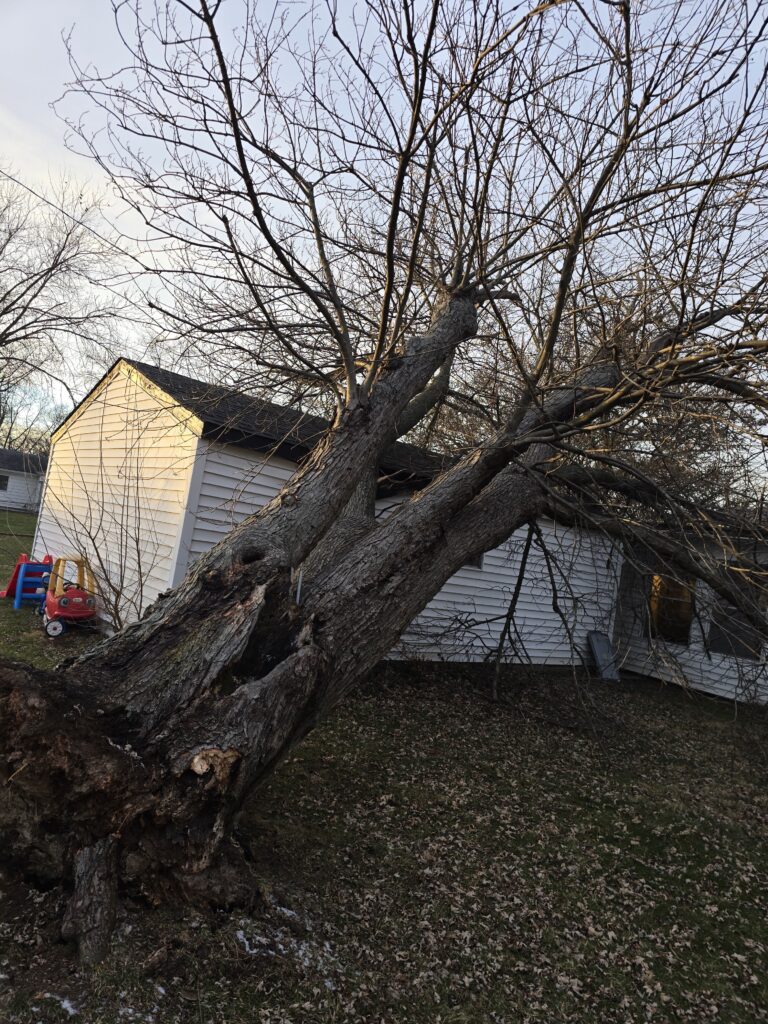
Indiana’s weather puts extreme stress on trees. High winds, saturated soil, heavy snow, ice buildup, and sudden temperature swings all weaken trees over time. While a tree may look healthy on the outside, hidden structural problems can develop internally and lead to sudden failure — often during storms or strong winds.
Understanding why trees fail and how to reduce risk can protect your home, your vehicles, and your family.
Root Failure Is the #1 Cause of Tree Collapse
Most people assume trees fall because the trunk snaps. In reality, the majority of failures begin underground.
When heavy rain saturates the soil, roots lose their grip. Shallow or damaged root systems allow trees to shift, lean, and eventually uproot. Once roots begin moving, even a moderate wind can topple a large tree.
Warning signs include:
- Leaning trees
- Soil lifting around the base
- Exposed roots
- Cracks in the ground near the trunk
These conditions require immediate professional evaluation, especially before the next storm arrives.
Hidden Decay Weakens Trees from the Inside
Fungal infections, insect damage, and rot slowly eat away at a tree’s structural integrity. The outer bark may look solid while the inside becomes hollow or brittle.
Common indicators of internal decay include:
- Mushrooms growing near the base
- Hollow sounds when tapping the trunk
- Cracks or seams in large limbs
- Peeling bark or soft wood
Once decay reaches a certain point, trimming can no longer correct the problem — removal becomes the safest option.
3. Overgrown Canopies Catch Wind Like a Sail
Trees that are not trimmed regularly become top-heavy. Thick, dense canopies trap wind, ice, and snow, increasing the stress on every limb and root.
When wind hits an unbalanced tree, it acts like a sail, pulling against weak branch unions and root systems. This is why storm failures often occur in overgrown or neglected trees.
Professional trimming reduces wind resistance, removes weak limbs, and allows trees to move safely in storms instead of breaking.
4. Previous Storm Damage Makes Trees Unstable
A tree that has survived one storm may already be compromised for the next. Cracked limbs, internal fractures, and damaged roots are often invisible from the ground.
This is why hanging branches and partially broken limbs after storms are so dangerous — they can fall days or weeks later without warning.
Post-storm inspections and hazard trimming are critical for preventing secondary damage.
5. Why Proactive Tree Care Saves You Money
Most emergency tree removals could have been avoided with early intervention. Regular trimming, inspections, and hazard removal are far less expensive than emergency crane work, insurance claims, and property repairs.
If a tree is leaning, losing large limbs, or showing signs of decay, addressing it early gives you more options — and better control over cost and safety.
Protect Your Property Before the Next Storm
Trees add beauty and value to your home, but unsafe trees can quickly become expensive and dangerous. Whether it’s trimming for storm prep, removal of a hazardous tree, or emergency response after severe weather, proactive care is always the smarter investment.
If you’re concerned about a tree on your property, Modern Tree Solutions provides professional evaluations, trimming, and emergency services throughout Anderson and Madison County.